


Your brand remains the starting point. The platform connects what players see with the work behind registration, ticket purchases, results, payments and customer relationships. Choose the configuration that fits your markets and team; the proposal defines which functions and services are included.
Your brand, your player journey
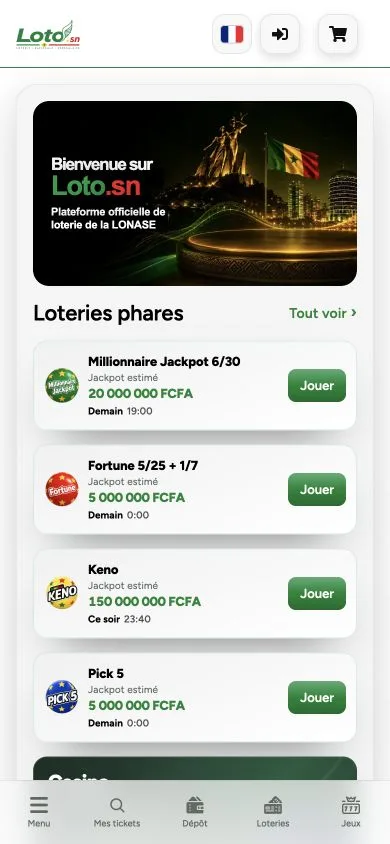
Shape the storefront around your domain, logo, colours and lottery offer. Review mobile navigation, game selection, purchase screens and account journeys together, rather than treating branding as a logo replacement. Localisation covers customer-facing copy and the operational context of languages, currencies, time zones and payment choices.
Connect the storefront to the operator tools
WhiteLotto’s product scope includes lottery presentation, management tools, CRM and payment integration. Use the following module map to define the configuration you want demonstrated. The platform overview explains how these areas work together.
| Area | What your team should see |
|---|---|
| Lottery storefront | Product catalogue, draw information, number selection, purchase flow and results. |
| Player accounts | Registration, account access, transaction history and the proposed balance or wallet workflow. |
| Payments and verification | Selected payment journeys, verification touchpoints, exceptions and escalation to responsible teams. |
| CRM and marketing | Customer communication, campaign workflows, reporting and connections to external marketing tools. |
| Operator administration | Access roles, product configuration, operational reports and financial reconciliation inputs. |
| Localisation | Language, currency and mobile journeys for the intended player audience. |
Request a demo built around an actual journey
A useful demo shows one connected process, not a sequence of unrelated screenshots. Ask to follow:
- A player choosing a lottery, selecting numbers and completing the proposed purchase journey.
- The corresponding account, transaction and ticket records in the operator environment.
- A result, settlement or exception, with the team responsible for handling it identified.
- A customer communication and the report used to check what happened.
Use demonstration data. The first sales conversation does not require player records, payment credentials or production access. Bring the workflows you need, including a failed payment or delayed result.
LottoPark in practice: finding an entry after a platform change
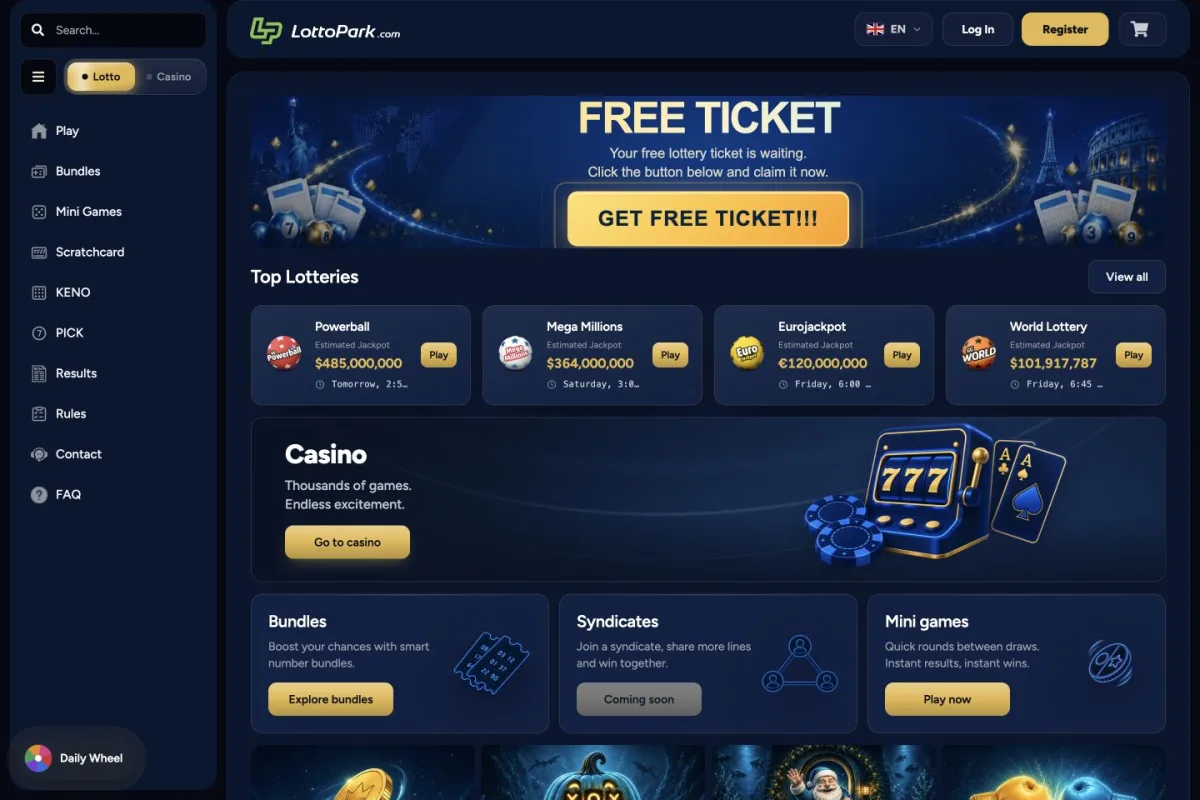
GG International’s archived platform description identifies LottoPark as a deployment of WhiteLotto software. The public LottoPark screen shows how a player finds a draw: each card names the lottery and displays its estimated jackpot. This is the storefront view captured in October 2026.
LottoPark’s migration notice explains how its support team can look up an older entry using the order reference and draw date. That gives a buyer a concrete acceptance test.
Give the demo team a fictional order from before a migration. Ask them to find the matching draw, show where the entry is recorded and identify who answers the player if the order is missing from their account. Agree who retains those records and for how long. Specify the system of record in your API requirements.
Separate platform delivery from operating responsibility
A White Label arrangement brings platform and service responsibilities together, but the agreement must name their owners. It should also identify the entity offering services to players and the markets covered.
| Party | Scope to document |
|---|---|
| Operator | Brand strategy, acquisition, approved markets, customer policies and the operating tasks retained by its team. |
| Platform provider | Configured software, agreed integrations, training, releases and contracted technical or managed support. |
| External partners | Payment acceptance, verification services, game or ticket arrangements and other separately contracted services. |
Compare this allocation with the Turnkey delivery model. The White Label, Turnkey and custom comparison helps evaluate control, costs and responsibility without assuming that a model name defines every contractual right.
Fit the platform into your existing business
Identify the payment, verification, CRM and reporting systems you want to retain. Agree the required records, system of record, integration owner and acceptance checks for each connection. Available interfaces and new integration work belong in separate lines of the proposal; a requested provider is not automatically a supported integration.
The existing WhiteLotto AI platform page presents the AI offer. Discuss the relevant features alongside your operational use cases rather than treating AI as a substitute for the core lottery workflow.
Turn launch inputs into a delivery plan
Prepare your market and operating arrangements, brand assets, game scope, payment dependencies, content and acceptance owners. WhiteLotto’s 21-day launch path depends on the agreed scope and prerequisites. Define when the delivery clock starts and which external approvals remain outside it. Use the go-live readiness checklist to organise those inputs.
Price the configuration and the ongoing operation
Request a proposal that separates setup, recurring platform or service fees, variable charges, integrations and third-party costs. Define the calculation base for any revenue share and identify minimum commitments, change requests and exit assistance. The pricing and three-year TCO guide helps compare scenarios. A product page cannot replace a quotation for your operating scope.
Define the scope of your managed lottery brand
Buy a defined operating scope, not an unspecified bundle. A White Label lottery platform proposal should connect the branded player journey to named services, dependencies and acceptance evidence. Start with one agreed launch configuration; record later markets, games and integrations as separate decisions rather than implied inclusions.
A managed brand arrangement is worth exploring when your team wants to lead the brand, customer proposition and acquisition while sharing specified platform and operational tasks with a provider. Bring a different brief if retaining an existing account platform, wallet or frontend is a requirement: the lottery API integration guide helps identify those boundaries. The scope review should resolve the fit before procurement proceeds.
For the first configuration, name the intended audience, languages, product types, account journey, payment route and operating hours. State who answers player queries and who investigates a purchase that has no confirmed ticket. These are working requirements, not evidence that every requested service is already included.
Make the proposal’s scope explicit
Assign every requested deliverable one of the following statuses. Add an owner, dependency and acceptance check to each line. A blank status is an unresolved scope question, not a commitment.
| Status | What must be specified | Useful acceptance evidence |
|---|---|---|
| Included | The exact function or managed service, its limits and responsible team. | A demonstrated workflow and the agreed support or operating procedure. |
| Configurable | Available settings, who changes them and the approval process. | An approved configuration tested with representative scenarios. |
| New work | A separately specified change, delivery owner, dependencies and acceptance criteria. | A reviewed specification and completed acceptance tests. |
| Third-party dependency | The external supplier, contracting party, onboarding requirements and failure owner. | Confirmed onboarding and successful end-to-end testing. |
| Excluded or deferred | What is outside this release and any temporary operational constraint. | A written exclusion acknowledged by the launch decision-makers. |
Apply this matrix to account access, balance handling, ticket confirmation and account closure, using the player account management guide to prepare questions. Do not treat a brand’s access to a dashboard as a complete answer to player data access, export and exit arrangements.
Move from a brand brief to an agreed release
Before committing to delivery, collect the operator’s approved brand materials, customer-facing policies, catalogue choices and nominated reviewers. Separately track dependencies that require another party’s action. Record the expected decision date, fallback and escalation owner; an unresolved payment arrangement or operating approval should remain visible in the launch plan.
What should the buying team receive?
- A versioned scope matrix distinguishing the first release from later requests.
- A responsibility map for routine work, exceptions, support handovers and incidents.
- A list of outstanding inputs with a named owner and a decision needed for each.
- Acceptance criteria and the people authorised to approve the launch.
- Documented data access and transition arrangements for the agreed partnership.
The provider evaluation checklist turns these questions into a purchasing brief. Use the UAT and go-live acceptance checklist for release evidence, and the operator readiness library for the supporting workstreams. Bring the resulting brief to CONTACT; the conversation can then focus on the specific configuration and decisions your team needs.
White Label lottery platform questions
Can we use our own brand?
Yes. Branding and storefront configuration are central to the White Label approach. Agree the design scope and approval process before implementation.
Does White Label automatically include a licence?
No model name establishes permission to operate. Confirm the relevant entities, markets and responsibilities as part of your operating arrangements.
Can we access and export player data?
Put access, permitted use, export formats and transition support into the agreement. Review a representative export, not only dashboard access.
Can an existing operator add lottery?
Bring your account, wallet and integration requirements. The scope discussion determines whether a managed vertical or a Turnkey delivery is the better fit.
What does the operator manage, and what does the platform provider manage?
The split depends on the agreed operating model, not the White Label name alone. Assign an accountable owner for technical operation, hosting and updates, then separately define responsibility for payment approvals, KYC decisions, prize funding and customer support. Record who handles exceptions, how incidents are escalated and which tasks belong to external partners. Use the provider evaluation checklist to compare the proposal with your team’s capacity and confirm the division of work before signing.
What must be ready before a 21-day launch?
A planned 21-day launch requires an approved scope, brand assets, game catalogue and market operating arrangements, plus payment and KYC provider readiness. Confirm the required integration access, name the people responsible for decisions and agree acceptance criteria before the delivery clock starts. Scope changes or outstanding external onboarding can affect the agreed timeline; operating approvals are not guaranteed within that period. The lottery launch planning guide helps organise these prerequisites and identify unresolved dependencies.
Discuss your White Label platform
Share your company, role, target markets, operating model, required integrations and intended launch date. We can focus the next conversation on a relevant demo and a practical proposal.

Wojciech Lysak is Managing Director of White Lotto and a senior iGaming B2B expert with nearly 20 years of experience. He specializes in white label online lottery platforms, turnkey solutions, gaming systems, and scalable B2B solutions for operators across global markets.
A recognized industry leader and visionary, he actively participates in major iGaming events worldwide and has led the creation of multiple successful platforms and projects across the gaming sector.
If you’re interested in starting your own online business in the iGaming sector, Wojciech will help you take your first steps on the path to success. LinkedIn